Our Journal · Entry 1 · November 2026
The Box of Reports
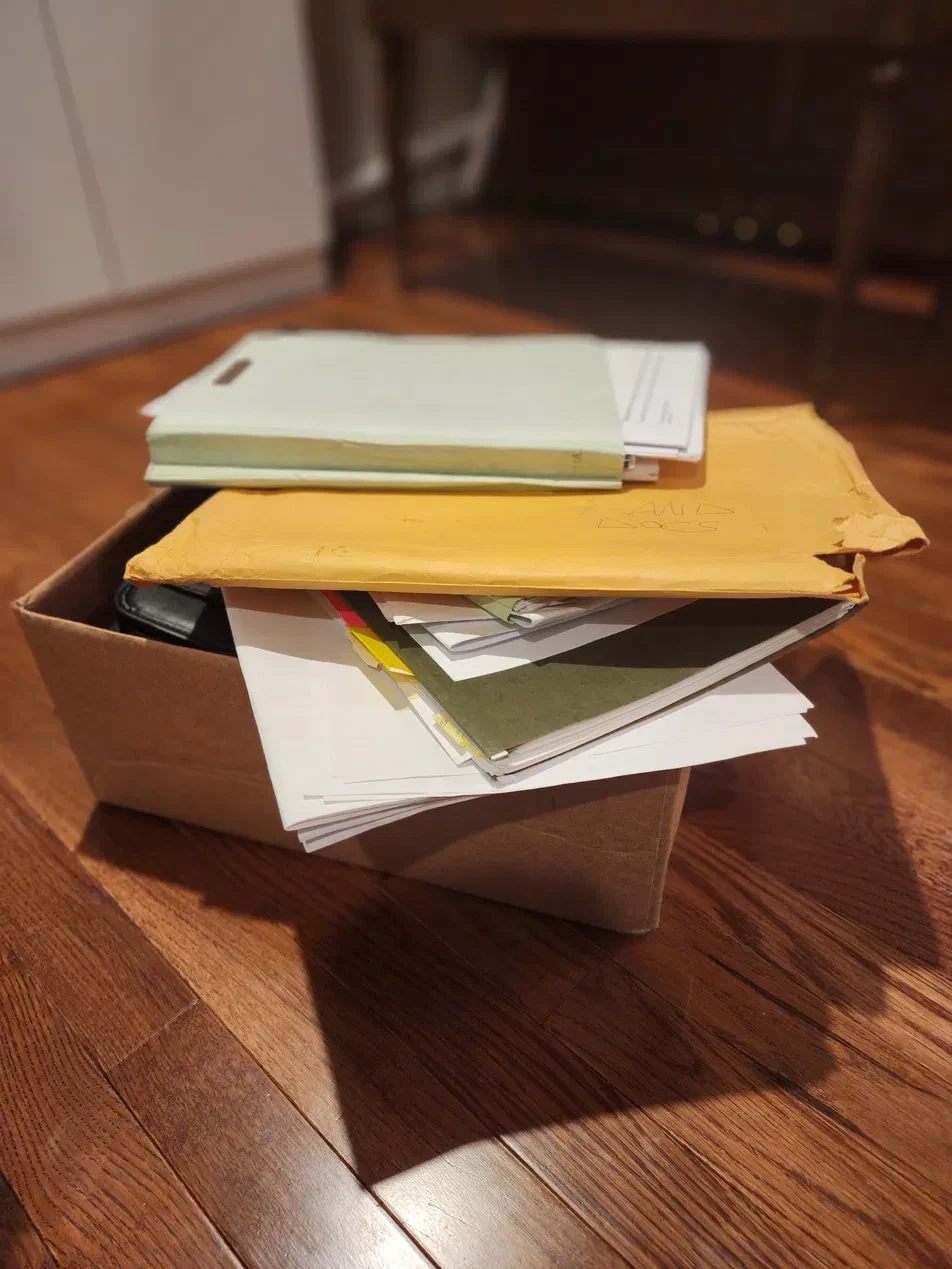
Two families stood on this hill before us with the same dream. They left us a stack of paperwork, and it turned out to be a treasure map.
Two families before us
The first time I read through the stack of reports that came with the land, I realized two families had stood on this hill before us with the same dream. One of them got as far as a county application in 2006.
Then it stopped.
I don't know why, and it isn't my story to tell. Life takes turns. But they left behind something more valuable than they probably knew: a paper trail. Soils and percolation tests from 2000. An update in 2006. A full geotechnical report and a biological report from 2007. And a county file that reads like a long-range forecast for everything we're about to face: steep slopes, a visual sensitivity overlay, a fault line in the neighborhood, archaeology and woodland reviews, and fire-clearance rules.
Reading it was a little like finding the answer key to a test you haven't taken yet, with one catch: some of the answers have expired. One letter says, in so many words, that it's good for three years. Those three years ran out a long time ago. Still, knowing the questions in advance is half the battle. In 2023, I went one step further and asked the original architect's firm for written permission to reuse their plans. They said yes. It's the kind of thing you never think to ask for until you do.
What a hill costs
Since this site promises honesty about money, here's ours. The land cost $335,000 in 2016, and the seller wanted half of it down, in cash.
Half. In cash.
That is how my beloved Corvette, last surviving relic of my single fighter-pilot days, rolled off to a new home. And that is how I came to owe my dad money. He charged me interest, of course. Family is family, but a loan is a loan.
I share this because land doesn't work like buying a house. Bank loans for raw land often want much bigger down payments than a mortgage, and sometimes there's no bank loan at all. If you're shopping for land, figure out early where your down payment is coming from. Ours came from a sports car and a very patient father.
Nine years from far away
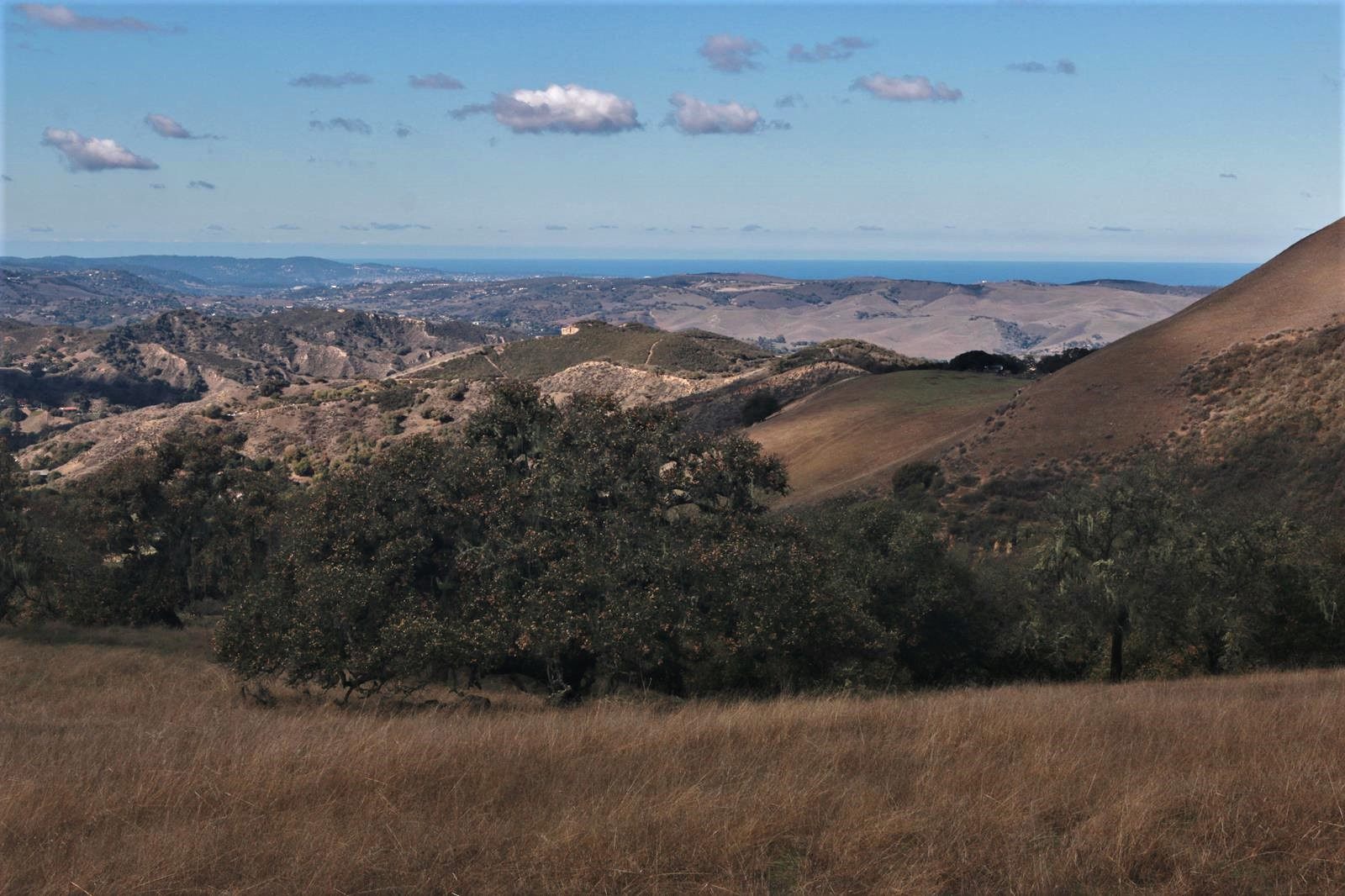
From 2016 to 2025 we owned this land from far away: mostly Colorado, at times Germany and Indonesia, with deployments mixed in. Raw land, it turns out, is a long, quiet subscription. There's the property tax every year, and a monthly community water bill for a meter that isn't hooked up to anything yet. We visited when we could, planted trees, and read everything the previous owners left behind, more than once.
Finding our designer
In the summer of 2025, Yvonne and I found our designer through his website. Something about his work spoke to us, and he came across as no-nonsense and pragmatic, which is exactly what you want when the house is going to sit on a hillside. Before we signed anything, I called one of his former clients. The verdict: great to work with.
Then the fun started. Yvonne and I built a vision package at our kitchen table in Colorado, dreaming up a house a thousand miles from the hill it would stand on. From there came several rounds of floor plans, then 3D block-outs of the house sitting on the slope, and in March 2026 a conceptual set. Now we're refining it and getting real pricing, which is the part of the process where dreams sit down with arithmetic and have a frank conversation.
The house we're dreaming of
Picture a ranch and craftsman home with some Spanish estancia warmth, set into the hillside rather than fighting it. It's roughly 4,000 square feet of living space, with the main living on one level, opening onto a big deck that looks out toward Monterey Bay. The must-haves: indoor-outdoor living around a courtyard, nine-foot ceilings, room for the whole family to gather, and keeping the oaks. They were here first. We dream of a pool, too, but our pocketbooks say otherwise, at least for now.
And then there's the number. We've been told to expect anywhere from $600 to $800 per square foot to build a quality house on challenging land like ours. Do that math on 4,000 square feet and you land somewhere between $2.4 and $3.2 million.
Yikes.
I'm sharing that not to scare anyone off, but because it's the number every land buyer should hear early. Hillside lots, long water lines and site work add up fast, and it's far better to know the range before you fall in love with a floor plan. Square footage is the biggest lever you control.
The water question
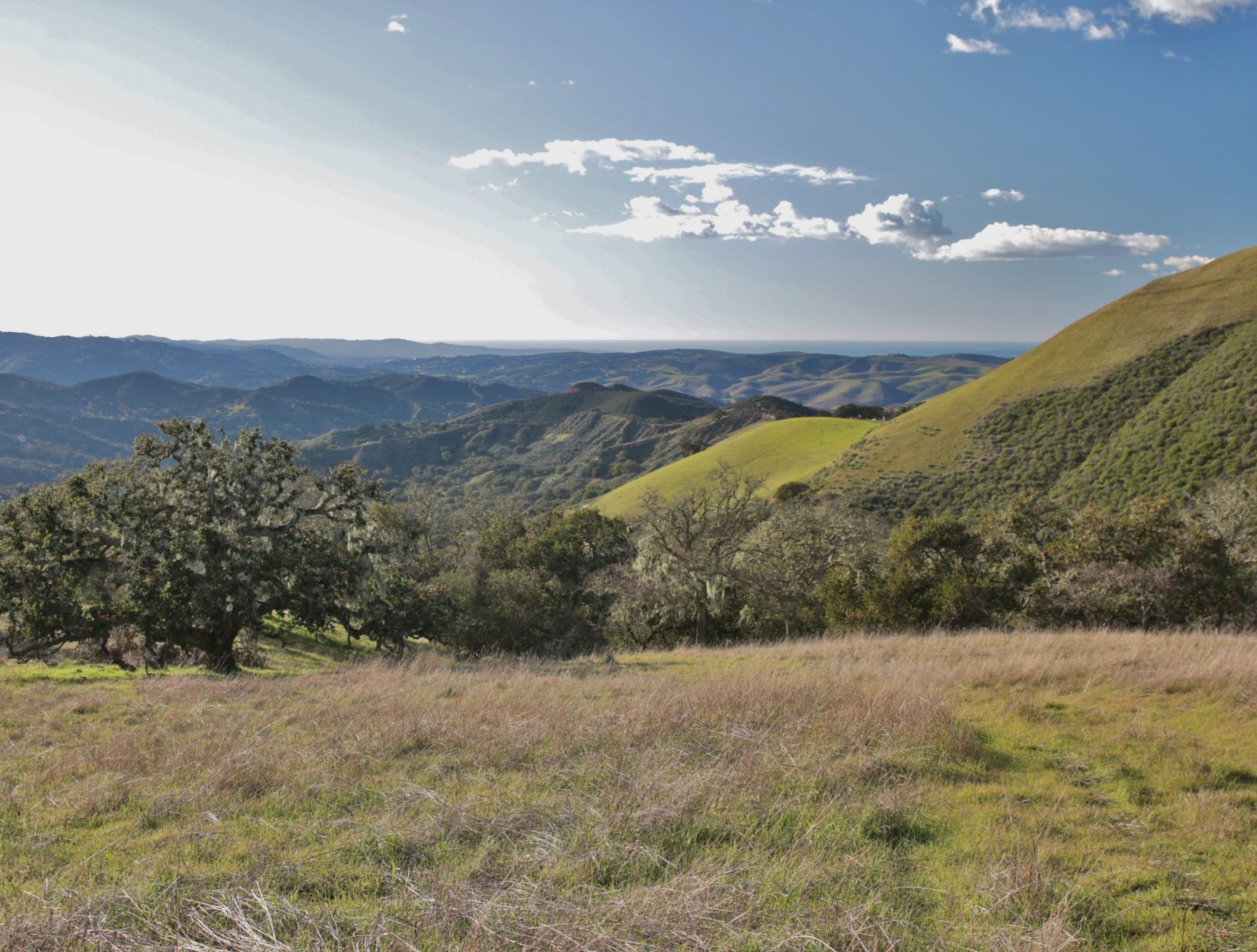
Here's a surprise nobody puts in the real estate listing: getting water from the community line up to a house site about 275 feet higher is its own engineering project. Water, it turns out, does not enjoy hiking uphill nearly as much as we do.
What I've learned so far
- Before you buy land, ask the county for the parcel's full planning history. Past applications, even failed ones, tell you exactly what you'll face: slopes, overlays, required studies. It's the cheapest due diligence there is.
- Old reports are gold, but check the expiration date. They give you context and save months. Many will need updating before the county accepts them.
- Call a past client before you hire a designer. Don't just ask whether they liked the house. Ask how things went when something went sideways.
- Raw land costs money every month, even when nothing is happening. Budget for the waiting, not just the building.
- Know where your down payment is coming from. Land often needs far more cash up front than a house does.
Time and money so far
- Found the land: 2015. Closed: 2016, for $335,000, with 50% down in cash.
- Planning from afar: nine years.
- Designer hired: summer 2025. Conceptual set: about eight months later.
- Studies that came with the land: roughly $20,000 to $40,000 worth of work at today's prices, and that's before counting the old architect's plans.
- Our design spend so far: about $12,000 to $15,000.
- Construction estimate we've been given: $600 to $800 per square foot for a quality build on challenging land, or roughly $2.4 to $3.2 million for 4,000 square feet.
- New studies: coming next, and I'll share the numbers when they land.
What's next
Over the next month or two, we're bringing a civil engineer on board, going back to the original soils firm to update their work, and turning the conceptual design into something a contractor can actually price. And getting through winter.
The bigger picture: I retire from the Air Force in August 2027. The goal is permits in hand by the end of 2027 and breaking ground in 2028. In Monterey County, "goal" is doing a lot of work in that sentence. I'll keep you posted.